 Story
Story William Lovetts Almshouse Charity: Building sustainable, affordable homes
William Lovetts Almshouse Charity has installed solar panels, ground-source heat pumps and EV charging points, all thanks to a Charity Bank Green Loan and Grant.
Social Need
The cost of renting a home has risen exponentially in recent years, with people on low incomes now spending close to two thirds of their income on rent.[1] Affordable social homes are few and far between, and many are draughty and poorly insulated.[2] Not only does this make the homes more expensive to run, it also leads to higher carbon emissions.
Organisation
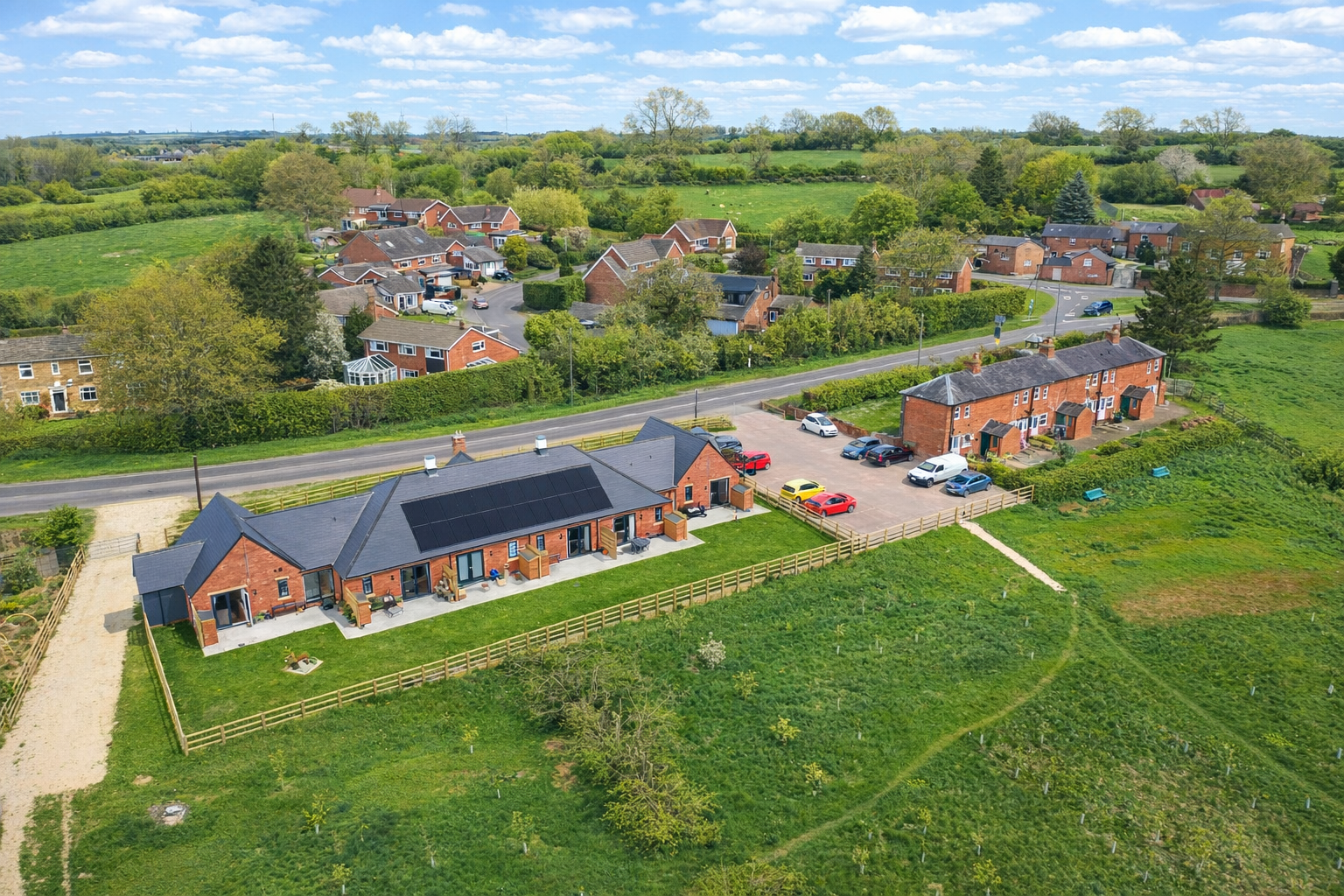
William Lovetts Almshouse Charity owns and manages 12 properties in the village of West Haddon in Northamptonshire. Six of the properties are 180-year-old terraced houses, while the other six are modern bungalows. Rather than rent, residents pay a maintenance contribution, which is capped at the social rent standard, plus a service charge to cover energy and water. Until recently, residents were all over 55, but the charity is now making up to six properties available to young people.
Loan and Grant
The six new almshouses were built with the help of a Charity Bank loan. While the trustees wanted to make the properties as sustainable as possible, they weren’t sure they could afford to do so. We offered a solution: a Green Loan of £93,000 combined with a Green Grant of £50,000.
Taking advice from a renewable energy consultancy, the charity installed two large boreholes to power six small heat pumps, one for each bungalow. It also installed solar panels with battery storage.. Combined with energy-efficient glazing and insulation, the technologies mean the homes are cheaper to run and carbon emissions are greatly reduced. The charity has also installed charging points for electric vehicles to ensure the properties are fit for the future.
Impact
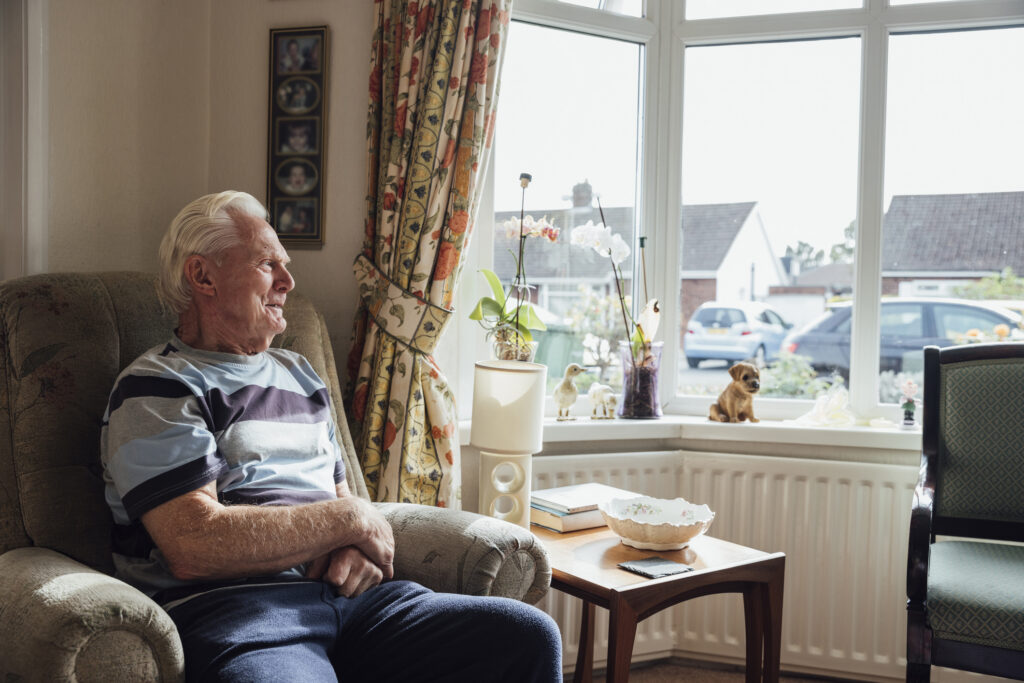
The residents of the older almshouses were given the option of moving to the new bungalows. Not only are these residents now enjoying more modern homes with brand new kitchens and bathrooms, they’re also benefitting from lower service charges thanks to the solar panels and heat pumps.
The older terraced houses have all been fully refurbished and three are now home to young couples starting their lives together. As their housing costs are affordable, they have more money to save towards a deposit for their next home. What’s more, the charity will top up that deposit with a grant equalling £10 for every week they’ve lived in the almshouse. After a maximum of three years, the young couples will move on, ensuring that other people in the local area can benefit from an affordable first home.
“We wanted to make the new bungalows as sustainable as possible and, thanks to Charity Bank’s Green Loan and Grants scheme, we’ve been able to incorporate all the renewables that we wanted to. Charity Bank have an empathy with and understanding of charities, how we work and the issues we face, and they’ve been incredibly supportive and positive throughout the process. I would recommend any almshouse charity speaks to Charity Bank to explore whether they can help, because I think they are an excellent partner to deal with for charities of our type.”
Charles Porter, Chair of Trustees at William Lovetts Almshouse Charity
“I’m really pleased with the bungalow; it’s lovely. It has a large open-space lounge and kitchen, and everything has been supplied, including the fridge and cooker. The underfloor heating is working really well to keep the house warm. It’s got such a good feel to it and I’ve been really well supported by the charity.”
Richard Lilleyman, a resident of William Lovetts Almshouse Charity
About Charity Bank
Charity Bank is the loans and savings bank owned by and committed to supporting the social sector. Since 2002, we have used our savers’ money to make more than 1480 loans totalling over £653m to housing, education, social care, community and other social purpose organisations.
Nothing in this article constitutes an invitation to engage in investment activity nor is it advice or a recommendation and professional advice should be taken before any course of action is pursued.

 Q&A
Q&A