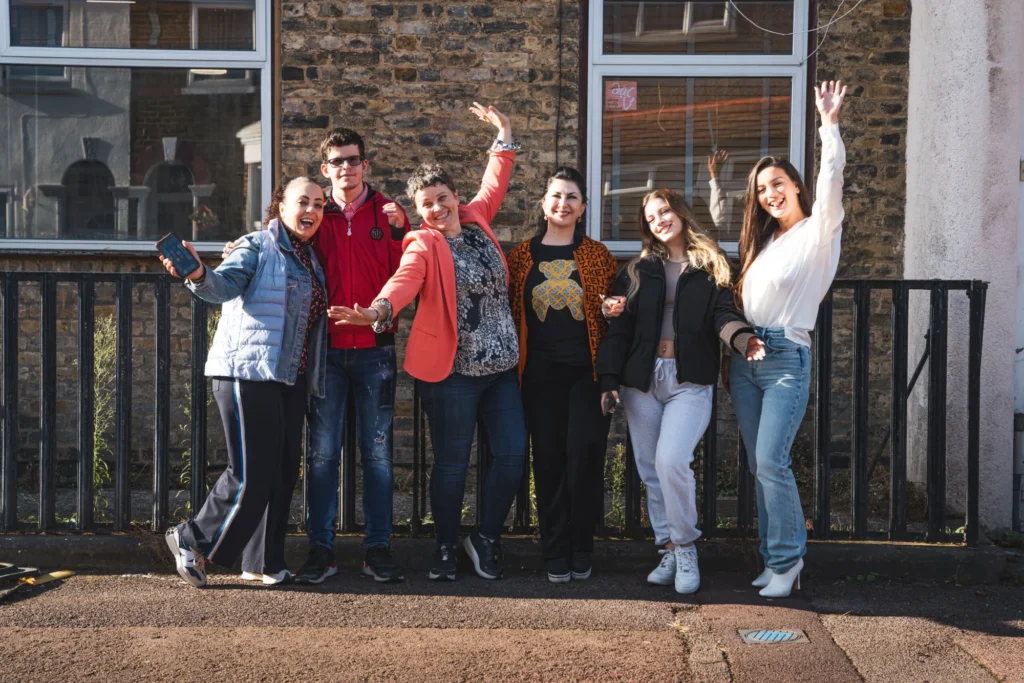
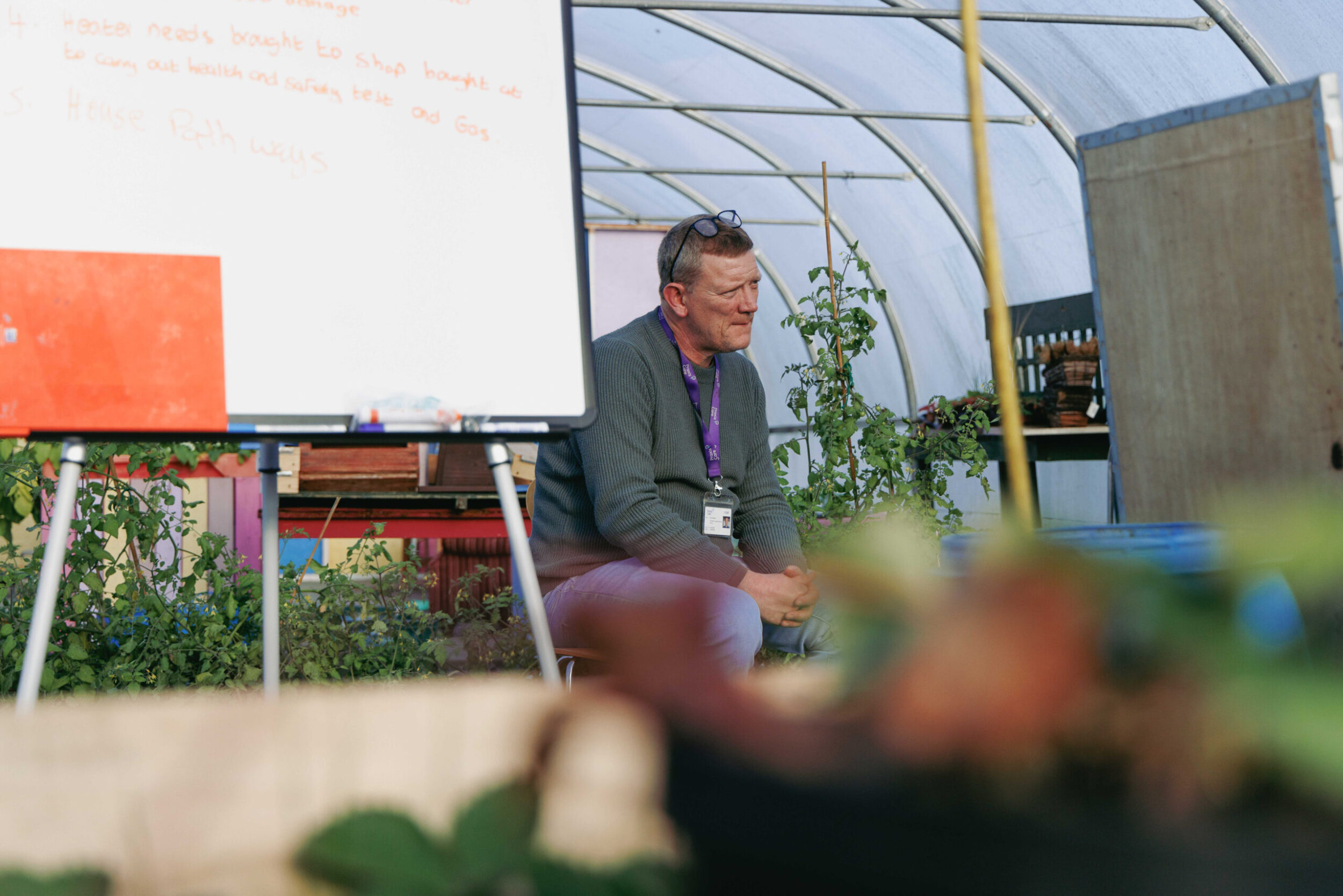
Shpresa drone

Social Impact Report 2026

Welcome to our social impact report documenting our lending activity in 2025

Introduction from our CEO

Dear reader, 

At Charity Bank, we believe finance should be a force for good. 

In a year marked by economic pressure and rising demand, we continued to support charities, social enterprises and other impact led organisations delivering essential services, creating homes, and strengthening communities across the UK. 

2025 was another year of strong progress. We approved £96.6 million in new loans, helping organisations grow, reach more people, and increase their resilience. Our funding continues to reach those who need it most, including underserved communities and organisations often unable to access mainstream finance. 

We also significantly expanded our green lending, supporting organisations to reduce carbon emissions and improve energy efficiency, lowering costs while contributing to a more sustainable future. 

Alongside lending, we widened access through initiatives such as LEAP and our cost of living programme, and made grants from our Brighter Futures Fund to support organisations beyond the scope of traditional finance. 

None of this would be possible without our savers and investors, whose money directly enables this impact. Together, we are helping to build a more inclusive, resilient and sustainable society. 

As you explore this section of our website, I hope you see not just the scale of our work, but the difference it makes to people, communities, and the environment. 

Ed Siegel

Chief Executive

Impact Highlights

£96.6m

of approved lending to organisations delivering social impact

493

charities, social enterprises, and impact-led borrowers

5,634

savers supporting good causes

This report explores how Charity Bank’s funding is distributed, how it’s used, and the impact it delivers—drawing on five key data sources

  • Loan approval data from 2025. We use approval data because it’s more reliable than drawdown data, which can be affected by external factors (such as a borrower’s changing circumstances). It’s important to note that not all loans that are approved are eventually drawn down. In 2025, 91.5% of approvals were drawn down. Even when a loan isn’t drawn, the approval alone can benefit borrowers, by helping them to unlock access to alternative funding. Most of the data in this report is from loan approvals, except where otherwise stated.
  • Drawn loan data from 2025. In some cases (for example, when explaining what money was used for) we use data from loans that were drawn down in 2025.
  • A borrower survey conducted in March–April 2026, with 109 responses from organisations with active loans during 2025/26.
  • Case studies that bring the numbers to life, offering real-world stories of how our loans support charities and their communities.
  • External data sources including financial and operational data cross-referenced with Companies House, the Charity Commission (UK and NI), and OSCR

This report uses the standardised social impact monitoring categories widely adopted by UK social investors and promoted by Big Society Capital. We follow an accounting methodology where each part of a loan is attributed to the year it was drawn by the borrower—or, for approvals, the date the loan was approved. 

In some cases, Charity Bank originates and manages loans alongside co-investment partners. This enables additional mission-aligned capital to be deployed to charities and social enterprises, extending the reach of our lending and increasing the overall impact delivered through each transaction.

Charity Bank only provides loans to organisations that have impact as a core purpose. These include charities, social enterprises, and other impact-led organisations.  

Each loan is assessed not just for financial viability but also for the social impact the borrower aims to deliver.  

When we assess the impact of a borrower, we measure how closely their work aligns with our five strategic priority areas: diversity, locality, additionality, depth of need, and environment. All borrowers must sign our statement of values, and we also seek evidence of their commitment to social impact. Finally, we make sure our investment is mission-locked, so that the money will only ever be used for social good. 

Over the lifetime of a Charity Bank loan, we conduct ongoing tracking of each investment’s impact through a structured system that combines financial monitoring, social impact evaluation, and borrower engagement. 

Our Strategy for Impact

Our Strategy for Impact 2026-2030

Charity Bank is driven by social impact, it’s the core measure of our success. By using deposits from individuals and organisations to provide loans to mission-led enterprises, we aim to create meaningful change and tackle pressing societal challenges. Our 2026 – 2030 strategy builds on our previous strategy and is informed by stakeholder engagement, it is our most ambitious plan to date. Its central aim is clear: to maximise social and environmental impact through sustainable, focused growth, while preserving the values that define Charity Bank. 

Our strategy aims to deliver impact across three interconnected levels: 

Strengthen Organisations

We help charities, social enterprises and impact-led organisations grow stronger and more impactful by offering tailored funding that meets their needs. By addressing gaps in finance and enhancing our service, we support organisations in building resilience and deepening their impact.

Communities & Planet

We prioritise lending to organisations supporting vulnerable and underserved groups. We also back green initiatives that cut emissions and promote sustainability, aligning our finance with both social and environmental goals for a fairer, more inclusive future.

Leading by Example

We embed our values internally by fostering an inclusive, respectful culture. Through equitable policies, flexible working, and talent development, we aim to lead by example, showing that a values-driven approach strengthens both culture and success.

How we make an impact

Challenge

Impact-led UK organisations often lack investment, financial expertise and support, limiting growth and resilience. This restricts innovation and impact, while leaving savers and investors without transparent, values-aligned opportunities for social returns.

Vision

A society that fosters vibrant communities and a healthy planet, giving every individual the opportunity to thrive.

Mission

To support and strengthen impact-driven organisations that improve people’s lives, while empowering savers and investors to put their money to work for positive social change.

Theory of Change

This diagram shows how our work creates impact, from the funds we receive through to the difference made in communities. Click on each stage to explore the detail behind our inputs, activities, outputs, outcomes, and overall impact. 

How our savers and shareholders help us create social impact

Three people smiling at Leigh Building Preservation Society

Our savers

When individuals or organisations deposit their funds with Charity Bank, they can be confident that their money is being used to support impactful organisations working towards social change.

Their savings directly contribute to addressing societal challenges and creating positive outcomes in communities. It’s not just an abstract notion of being ethical; it’s a concrete action that leads to tangible social impact.

Find out more

Our Shareholders

Charity Bank’s ability to meet the ongoing needs of the social sector and support a wider range of social sector organisations relies on the capital investment from our shareholders and subordinated debt investors. They play a crucial role in our ongoing success and impact.

Social impact multiplied A three-stage looping animation: £1m of capital is invested in Charity Bank, enables £8m+ of lending to charities and social purpose organisations, and loan repayments are re-lent, multiplying impact over time. £ £1m of capital invested in Charity Bank £ £ £ £ Enables £8m+ of lending to charities and social purpose organisations Loan repayments are re-lent, multiplying impact over time

Social Impact Multiplied

For every £1m of investment capital (equity and subordinated debt), Charity Bank can make around £8m of social loans.

When the loans are repaid, these funds can be recycled again and again, generating even greater multiples of social impact. In addition, over half of our borrowers were, because of our loan, able to unlock additional funding such as grants or contracts.

"Investment is an important tool which can work alongside grant funding to help organisations thrive and create impact. We hope to demonstrate with our portfolio that trusts and foundations' assets can be invested to help deliver their charitable aims."

Caroline Mason CBE, CEO, Esmee Fairbairn

"Charities, social enterprises and faith-based organisations provide key services to local communities in areas such as housing, social care, food banks, skills development and tackling loneliness. Charity Bank loans are a vital part of the funding landscape for these organisations, enabling them to sustain, improve and grow their services."

Vanessa Morphet, Head of Social Impact Investment at the Church of England

Impact in numbers

Key results from all approved loans in 2025

Where our loans went

Our regional managers support organisations across England, Scotland, Wales, and Northern Ireland. Click the map to explore how much we approved to charities, social enterprises, and impact-led organisations in your region during 2025.

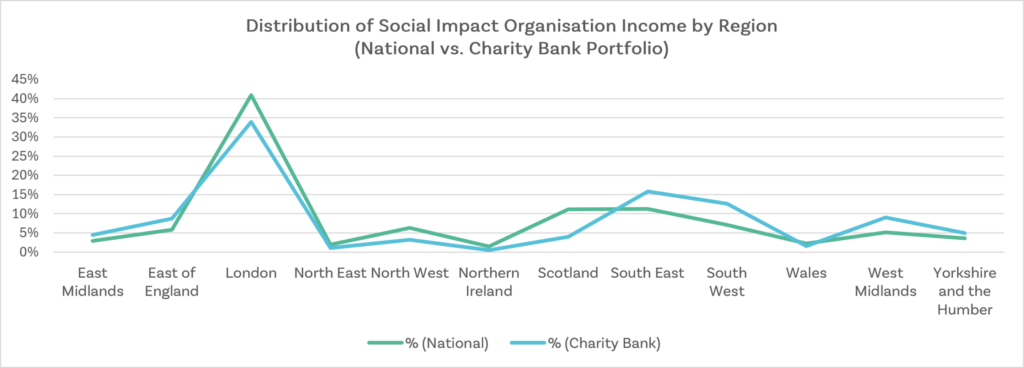
Our goal is to reach every part of the UK in proportion to the need. As the charts below show, our lending closely reflects the distribution of UK charities and their total income by region.

North West

£3,075,301

5 organisations

North East

£1,068,000

3 organisations

London

£32,788,763

18 organisations

Yorkshire & Humber

£4,759,650

9 organisations

Wales

£1,550,000

1 organisation

West Midlands

£8,715,000

9 organisations

East Midlands

£4,351,989

8 organisations

South West

£12,184,466

17 organisations

Northern Ireland

£525,000

1 organisation

Eastern

£8,439,000

4 organisations

Scotland

£3,885,000

1 organisation

South East

£15,275,250

16 organisations

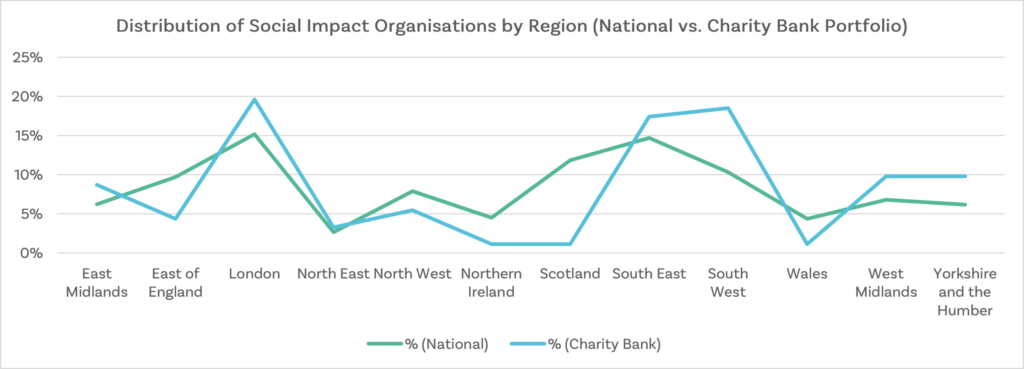
This chart shows how the income of charities varies across regions of the UK, and compares this to Charity Bank’s loan portfolio.

Our aim is to reach every part of the UK in proportion to need. As this chart shows, our lending generally reflects the distribution of UK charities and their income. Scotland remains the main exception, and increasing our activity there is a core part of our current planning. 

Source: UK Civil Society Almanac 2024, NCVO  

This chart illustrates the distribution of charities and Charity Bank loans across regions of the UK. London leads with the highest percentage of charities and loans. 

Broadly, the Charity Bank portfolio reflects the distribution of organisations across the UK. However, Scotland, Wales and Northern Ireland have fewer Charity Bank loans compared to their share of charities, indicating underrepresentation. 

Source: UK Civil Society Almanac 2024, NCVO  

The types of organisations we have supported

Explore our interactive chart for more information

Impact in action

How our loans benefit people, communities & the planet

How our loans strengthened our borrowers

Through our loans and support, we strive to leave organisations in a stronger position, both in terms of their ability to carry out their mission and their financial stability. These results highlight responses to a borrower survey conducted in early 2026.

Hover or tap on each chart segment to see more information.

Impact in action

Supporting young people through equine therapy

Strength and Learning Through Horses

“All of the young people we support are struggling with their mental health. Many have experienced trauma or neglect.”

Find out how Strength & Learning Through Horses is helping.

Find out more

Watch these videos to find out more about how our loans are working to strengthen our borrowers.

Kashmir Youth Project

Kashmir Youth Project used their Charity Bank loan to refinance an existing loan to help them continue to sustain their services within the community.

Eden Project

A Charity Bank loan has supported the Eden Project, a global garden, educational charity and social enterprise that seeks to demonstrate and inspire positive action for the planet.

Dundee Women’s Aid

A Charity Bank loan helped Dundee Women’s Aid purchase a much needed four-bed house so that they can offer refuge to women with larger families fleeing domestic violence.

New Starts

A loan from Charity Bank helped NewStarts buy their warehouse property, which is not only saving the charity money, but also enabling them to support more people with their services.

Foundation of Light

A Charity Bank loan enabled Foundation of Light to build the Beacon of Light, a community hub with sport, events, education, and wellbeing facilities.

Whitley Bay Big Local

A Charity Bank loan enabled Whitley Bay Big Local to renovate their new building so that they can offer more for the people in their community.

Homes for Good

Loans delivered by Charity Bank in partnership with another social investor, enabled the social enterprise to buy and renovate more than 210 properties across Glasgow.

René House CIC

A loan from Charity Bank has been able to help René House pay for property improvements, take on new staff and give the CIC breathing space to focus on securing long term sustainability.

Leigh Building Preservation Trust

Leigh Building Preservation Trust used a Charity Bank loan to make further improvements to the Spinner Mill, which houses organisations ranging from arts and heritage to education and training.

Who our drawn loans have supported

Young People - £2.5m

  • Housing
  • Mental Health & Wellbeing
  • Family, Friends & Relationships
  • Sports
  • Arts
Case study

Ability Dogs 4 Young People IoW

The charity provides assistance dogs to help young people with disabilities gain independence and improve wellbeing. A Charity Bank loan supported the purchase of its operating premises.

Read more

Children - £1.2m

  • Community
  • Training & Education
Case study

Berkhamsted & Hemel Hempstead Hockey Club

Berkhampsted & Hemel Hempstead Hockey Club used a Charity Bank loan for a new astro pitch and are saving over £30,000 a year.

Read more

Ex-offenders & prisoners - £1.1m

  • Housing
Case study

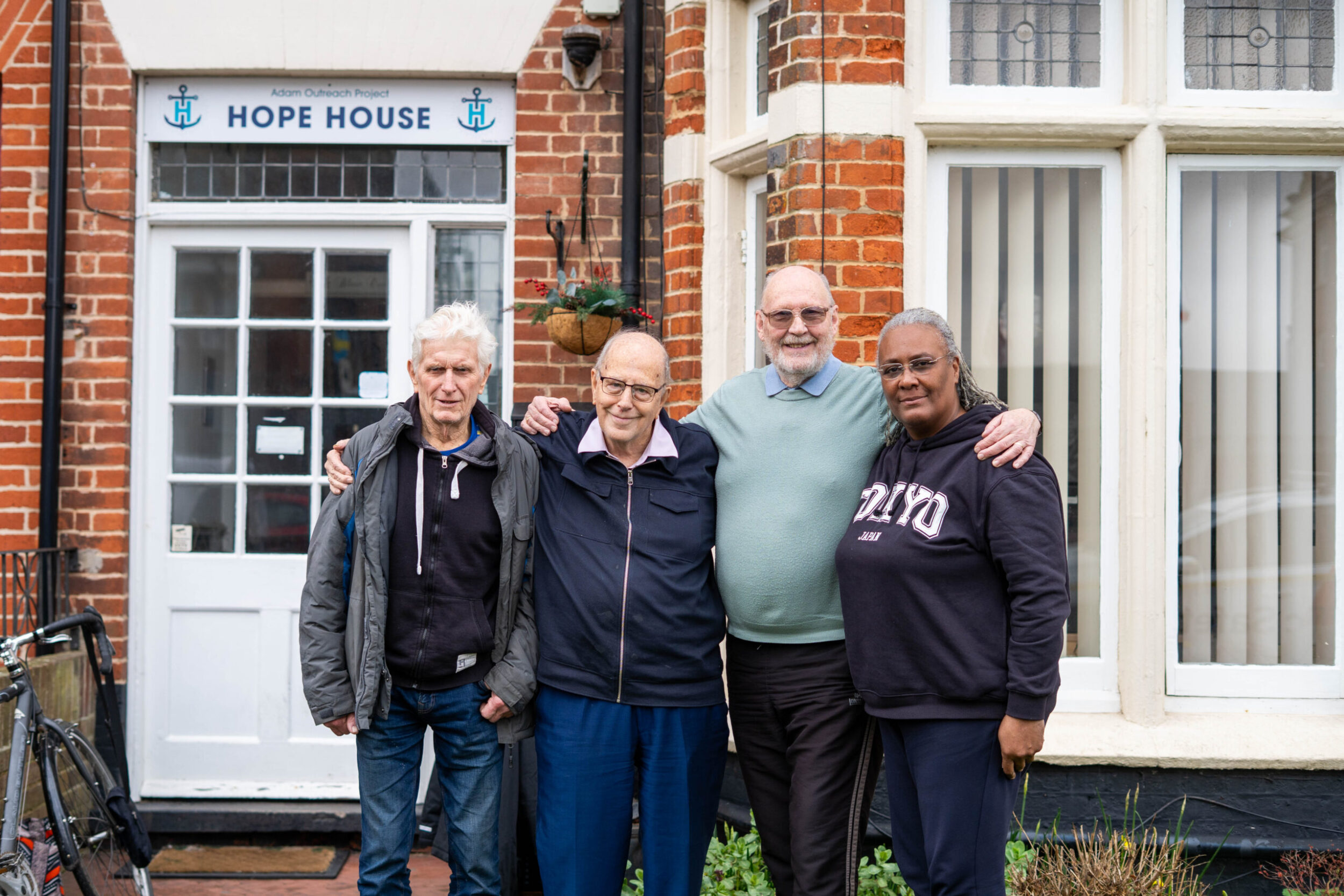
Adam Outreach

The charity were able to buy another property to expand their provisions for homeless men and women with the help of a Charity Bank loan.

Read more

General Population - £28.2m

  • Housing
  • Faith
  • Community
  • Conservation of the natural environment
  • Arts
  • Heritage
  • Mental Health & Wellbeing
  • Sports
Case study

Kent Wildlife Trust

Kent Wildlife Trust’s visitor’s centre has been transformed thanks, in part, to a loan and grant from Charity Bank

Read more

Older People - £8.5m

  • Housing
  • Community
  • Mental Health & Wellbeing
Case study

William Lovett’s Almshouses

William Lovett’s Almshouses provides affordable housing for older people. A Charity Bank loan funded six new homes, doubling provision and incorporating more sustainable design.

Read more

People experiencing homelessness - £6.3m

  • Housing
  • Community
  • Income & Financial Inclusion
  • Mental Health & Wellbeing
Case study

YMCA Together

YMCA Together offers accommodation and support for people at risk of homelessness in Liverpool, Sefton and Knowsley. A Charity Bank loan helped them buy 10 properties.

Read more

People living in poverty and/or financial exclusion - £3m

  • Housing
  • Mental Health & Wellbeing
  • Community
Case study

Bradford Flower Fund Homes

Bradford Flower Fund Homes provides affordable housing for older people. A Charity Bank loan supported the development of 26 new apartments, increasing access to low cost housing.

Read more

Refugees, asylum seekers or undocumented and other migrants - £1.2m

  • Housing
Case study

Refugee Education UK

Supports refugee children to access education. Loan and grant funding helped expand its centre and create a safe study space.

Read more

People with mental or physical health needs - £6.4m

  • Housing
  • Training & Education
  • Community
  • Mental Health & Wellbeing
  • Family, Friends & Relationships
  • Physical Health
  • Employment
Case study

The Hamlet Centre

Offers a range of services for children and adults with severe disabilities and complex needs in Norwich. A Charity Bank loan helped expand its day centre.

Read more

How our loans benefit people, communities and the planet

From urban sports centres to affordable housing and environmental innovation, Charity Bank’s support is helping organisations create lasting impact across society and the environment.

Community

Adrenaline Alley: a world-class urban sports centre

“Without the Charity Bank loan, we would not have been able to grow and develop in the same way. We’ve also been able to make some significant improvements, such as building a two-storey café, diversifying our revenue income and ensuring sustainability.”

Mandy Young MBE DL, CEO/founder Adrenaline Alley

People

Homes for Good: Affordable homes for people in Glasgow

“Charity Bank was the most enthusiastic and really believed in what we wanted to do. Charity Bank has been a 100% supportive partner from the start and I know I can just pick up the phone if I want any advice.”

Susan Aktemel, Founder Homes for Good

Planet

Eden Project: Sustainability and education for future generations

“Charity Bank was recommended to us by one of the major foundations that we work with. When we got talking to them [Charity Bank] we realised very quickly that we were very much aligned with the values that we had as organisations and we were very excited to work with them.”

Dawn Wilding, Eden Project, Chief Financial Officer

Strategy in focus

How we’re performing against our impact strategy

Our Strategic Priorities

Our 2023–2027 Strategy for Impact sets out a clear and targeted vision for how we aim to use our savers’ and investors’ money to create meaningful change. It defines the outcomes we seek and the principles that guide our lending decisions.

Customer
Continually improve service to become the lender of choice for UK impact-driven organisations.

Additionality
Fill gaps in finance provision with tailored funding for the social sector.

Strengthen
Build borrower resilience and capacity to help them deliver their mission.

Diversity
Extend outreach to groups that have been systematically underfunded.

Depth of Need
Prioritise organisations serving the most vulnerable and marginalised.

Locality
Increase lending in underserved regions and communities.

Environment
Grow our green lending to help customers cut costs and carbon emissions.

Growing our impact year-on-year

Loans approved to organisations serving the 30% most deprived communities in the country, 2023-2025

2023
28% of total approved lending
£19.2m
2024
46% of total approved lending
£39.7m
2025
46% of total approved lending
£44.4m

Loans approved to diverse-led organisations, 2023-2025

2023
21% of total approved lending
£14.3m
2024
27% of total approved lending
£23.1m
2025
36% of total approved lending
£34.9m

Loans approved to Green projects, 2023-2025

2023
9% of total approved lending
£6.1m
2024
12% of total approved lending
£10.7m
2025
27% of total approved lending
£25.9m

Access to finance

Charity Bank approves loans to a wide range of organisations – many of whom may have otherwise struggled to access the funding they needed.

Explore our interactive chart for more information

Proof that impact and financial strength go hand in hand

Our low loan loss rate demonstrates that charities, social enterprises and impact-led organisations are dependable borrowers when assessed and supported appropriately.
  • 500% portfolio growth over the past decade.
  • Less than 0.2% loan losses since 2002.

Lending to Diverse-Led Organisations

Since the launch of our impact first strategy in 2023, we have made a deliberate commitment to support diverse-led organisations, groups that have historically faced systemic barriers to funding.

In 2025, we approved a total of £34,861,014 in loans to 29 diverse-led organisations.

This is a 51% increase compared to our lending to diverse-led organisations in 2024, and almost as much as the previous two years combined, reflecting our commitment to serving this sector.

Our programmes

We support our strategic impact goals through key programmes. The snapshot below highlights results from our LEAP, Green, and Cost of Living programmes, as well as the Brighter Futures Fund.

  • Cost-of-Living Programme

    Supports organisations helping communities most affected by rising costs. Since launching in 2024, we have provided £1.17m in loans and £1.33m in grants, typically through a 50:50 blended model. Over 80% has supported organisations in the 30% most deprived areas. 

  • Green Programme

    Funds energy assessments and helps organisations to reduce emissions and energy costs. In 2025, we supported 43 organisations, providing £1.4m in grants and over £700k in loans. By the end of 2025, we had provided £1.6m in grants and £2.2m in loans.

  • Lending Equal Access Programme (LEAP)

    Expands access to finance for under-served organisations. In 2025, we supported 26 organisations, providing £263k in grants and £1.7m in loans. 15 of which were diverse-led and 13 support the most deprived communities. 

  • Brighter Futures Fund (BFF)

    Uses targeted grants to unlock lending for organisations that would otherwise miss out. Since launching in late 2024, we have provided £684k in grants, unlocking over £4.6m in lending, around £6.80 for every £1 of grant funding. 88% of recipients supported the most deprived communities and 65% were diverse-led 

Hear about the organisations our programmes support

Cost-of-Living

Support When It Matters (SWIM)

Support When It Matters provides targeted, culturally sensitive support for people of African/ Caribbean heritage who are homeless, have been in prison or are misusing drugs or alcohol.

Read more
Green Programme

White Horse Housing

White Horse Housing is making its homes more energy efficient with the help of a Green Loan and a Green Grant from Charity Bank.

Read more
Brighter Futures Fund

Kundakala

Kundakala is dedicated to empowering ethnic minority women by providing them with the skills and support needed to become professional seamstresses. A grant from Charity Bank is supporting their 2025/2026 plan.

Read more

Your bank for good

We combine specialist lending with a values led approach, helping organisations grow, strengthen communities and create lasting change. This is reflected in our customer feedback, with high satisfaction scores and strong recommendations from the organisations we support. 

Explore why our borrowers choose Charity Bank and how we are performing below. 

Why our customers choose us

69

Net Promoter Score

Net promoter score from new loans made in 2025

94%

Would recommend Charity Bank

2024 Borrower survey respondents

82%

Borrowed due to Charity Bank's personal service

2024 Borrower survey respondents

93%

Borrowed due to our understanding of charities and social enterprises

2024 Borrower survey respondents

89%

Borrowed because we are part of the social sector

2024 Borrower survey respondents

71%

Were recommended to Charity Bank

2024 Borrower survey respondents

64%

Borrower to align money and mission

2024 Borrower survey respondents

82%

Borrower due to our ethical approach

2024 Borrower survey respondents

77%

Found the loan process straightforward

2024 Borrower survey respondents

86%

Felt supported throughout the loan process

2024 Borrower survey respondents

Our accreditations

As a bank on a social mission to do good, Charity Bank has sought out independent certification of our values and ethics. These help us in our aims to gain the trust of a growing community of savers and borrowers. Charity Bank currently has accreditation or affiliation with all of the following bodies:


Good Shopping Guide
Charity Bank is a top-ranked ethical bank by Good Shopping Guide for 18 years running.
The King's Award for Enterprise
Charity Bank has been awarded the King’s Award for Enterprise in Sustainable Development, one of the UK’s most prestigious business awards.
Investors in the Environment (iiE)
Charity Bank has successfully met the criteria of the iiE’s Green Level which involved meeting specific criteria related to energy efficiency, waste management, water usage and other environmental considerations.
Living Wage
Charity Bank is an accredited Living Wage Employer, committed to working with Living Wage suppliers.
Global Alliance for Banking on Values (GABV)
We are a member of the Global Alliance for Banking on Values, promoting sustainable economic, social and environmental development.
The Partnership for Carbon Accounting Financials (PCAF)
We joined the Partnership for Carbon Accounting Financials to measure and disclose greenhouse gas emissions.
B Corporation
We are a certified B Corporation, meeting high standards of social and environmental performance.
Fossil Free Alliance
Charity Bank is a certified member of the Fossil Free Alliance and has been highlighted as Top Pick for being one of the Greenest Banks in the UK.
Responsible Finance
Charity Bank is a recognised Responsible Finance Provider, dedicated to providing affordable and fair finance for positive impact.
Disability Confident Employer
Charity Bank is a Disability Confident employer, challenging attitudes and increasing understanding of disability, while removing barriers for disabled people with long-term health conditions and support disabled people to fulfil their potential.
Social Enterprise UK Social Enterprise UK
Charity Bank is the only bank to be certified as a social enterprise. Social Enterprise UK’s expectations of social enterprises include transparency and having a clear social and environmental mission.
Diversity Forum
We are a signatory of the Diversity Forum Manifesto, committed to equity, diversity and inclusion.
Women in Finance
Charity Bank is a signatory of the Women in Finance Charter, committed to the representation of women in senior mangerial roles in financial services.