 Story
Story Framework: Closing the digital divide
Framework is helping to narrow the digital divide for some of the most vulnerable people in society.
Social Need
Digital exclusion affects millions of people across the UK. A lack of digital skills or technology makes it harder for people to keep in touch with friends and family and to carry out everyday tasks like accessing a bank account, buying train tickets, booking GP appointments and paying bills. When you’re struggling with the cost of living, the impact is even greater. If you can’t access the internet, it’s extremely difficult to search for jobs and training opportunities, apply for housing and benefits or access support. Without basic digital skills, your job prospects are limited and you’re likely to pay more for goods and services, as you can’t shop online or research the best deals.
Organisation
Framework is a charity that supports people who are homeless or at risk of becoming homeless.
They offer a holistic, tailored package of support to over 18,000 people a year. From accommodation to health and employment support, every service is designed to help people get back on their feet and improve their prospects.
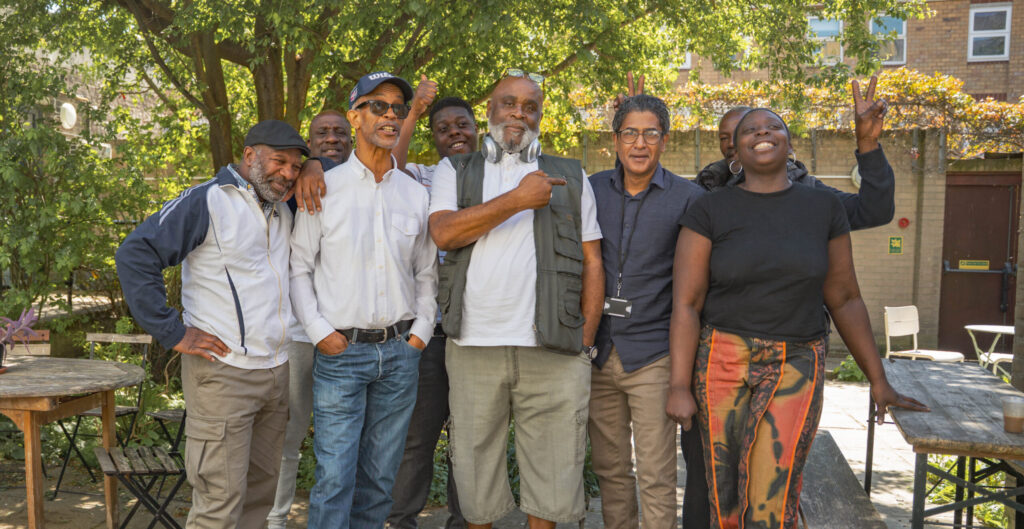
Framework launched the Digital Inclusion Project to address digital poverty amongst its service users. The project helps people to master digital skills that are crucial for modern life, such as sending emails, managing finances and applying for jobs. Framework offers group digital training sessions, one-to-one mentoring and access to online training programmes.
Kevin Rookes, Digital Inclusion Coordinator, shares, “We start at the real basics and work up to everyday tasks. It’s not about changing the font size on a Word document; it’s about how you apply for housing, how you manage your emails, how you do a CV, how you manage your health through the NHS app, how you pay all your bills, manage your money, avoid scams and so on.”
Cost of Living Grant and Loan
Framework’s Digital Inclusion Project is being funded with the help of Charity Bank’s Cost of Living blended finance programme. We provided a £75,000 loan, which was matched by a grant from Access – The Foundation for Social Investment.
The funding is helping to cover the project’s running costs, including the two staff members, Kevin Rookes and Richard Redmore (Digital Inclusion IT Support Officer). Kevin and Richard are supported by a team of volunteer Digital Champions, many of whom are former service users. Kevin shares, “Charity Bank has enabled Framework not just to continue the digital inclusion work, but to improve it.”
Digital exclusion isn’t just about a lack of skills; it’s also about access to technology and the internet. 1.6 million adults in the UK don’t have a smartphone, tablet or laptop, and 1.9 million households struggle to afford a mobile phone contract.
Framework’s Digital Inclusion team reached out to local businesses. As a result, hundreds of laptops, phones, tablets and other items have been donated to the project. Framework refurbishes the devices and distributes them to service users. Staffline, for example, has donated more than 150 devices to the project, together worth around £12,000.
Richard says, “Now, when one of our corporate partners is refreshing their equipment, they’ll think of us and send us their old kit, often 50 laptops at a time. Vodafone has also given us thousands of SIM cards, which come with 40 gigabytes of data a month and unlimited calls and texts.*”
Framework has also partnered with Material Focus, which collects donated devices to be redistributed to people who need them. Many of the laptops collected are so old that they have very little material value. However, by replacing the operating systems, Richard and Kevin have turned them into useful devices that can access online training programmes and certain websites. These have been placed in Framework’s hostels for residents to use.
The team has recently developed an AI model to help users with IT questions when a staff member or volunteer isn’t available. Soon, service users will be able to log into the system to access tailored content to support their individual learning goals.
Impact
Last year, Framework helped more than 1,000 people to reduce cost of living pressures by increasing their digital skills and/or giving them access to free devices and the internet. After mastering basic digital skills, many of Framework’s service users have gone on to learn more complex skills that will prove invaluable in the workplace.
Richard shares, “One woman who came in lost her job because she’d made a mistake using the company’s software. We gave her an iPhone and taught her how to use it. We also got her more confident with laptops and computers. In the end, one of our Digital Champions created a small programming course for her, because she’d rebuilt her confidence and wanted to explore all the different things that she could do with technology.”
Many of Framework’s service users are extremely vulnerable. Michael, for example, had struggled with substance use challenges for 25 years and was sleeping rough when Framework met him. Without a phone, he’d become isolated from his family and was struggling to access services. The Digital Inclusion Team provided him with a phone and six months’ worth of free data and calls. Michael shares, “Having a phone that I didn’t need to keep topping up meant that I could call my kids. It also meant my support worker could get hold of me and I could call him whenever I needed to.” With Framework’s support, Michael is now in recovery and is training to become a counsellor.
“Charity Bank has enabled Framework not just to continue our digital inclusion work, but to improve it.”
Kevin Rookes, Digital Inclusion Coordinator at Framework Charity
* The Vodafone SIM cards include 40GB of data a month, along with free calls and texts, for six months. After the six months have ended, Framework can usually provide the service user with another SIM card.
About Charity Bank
Charity Bank is the loans and savings bank owned by and committed to supporting the social sector. Since 2002, we have used our savers’ money to make more than 1480 loans totalling over £653m to housing, education, social care, community and other social purpose organisations.
Nothing in this article constitutes an invitation to engage in investment activity nor is it advice or a recommendation and professional advice should be taken before any course of action is pursued.
 News
News