 Q&A
Q&A I Would Recommend Any Almshouse Charity Speaks to Charity Bank
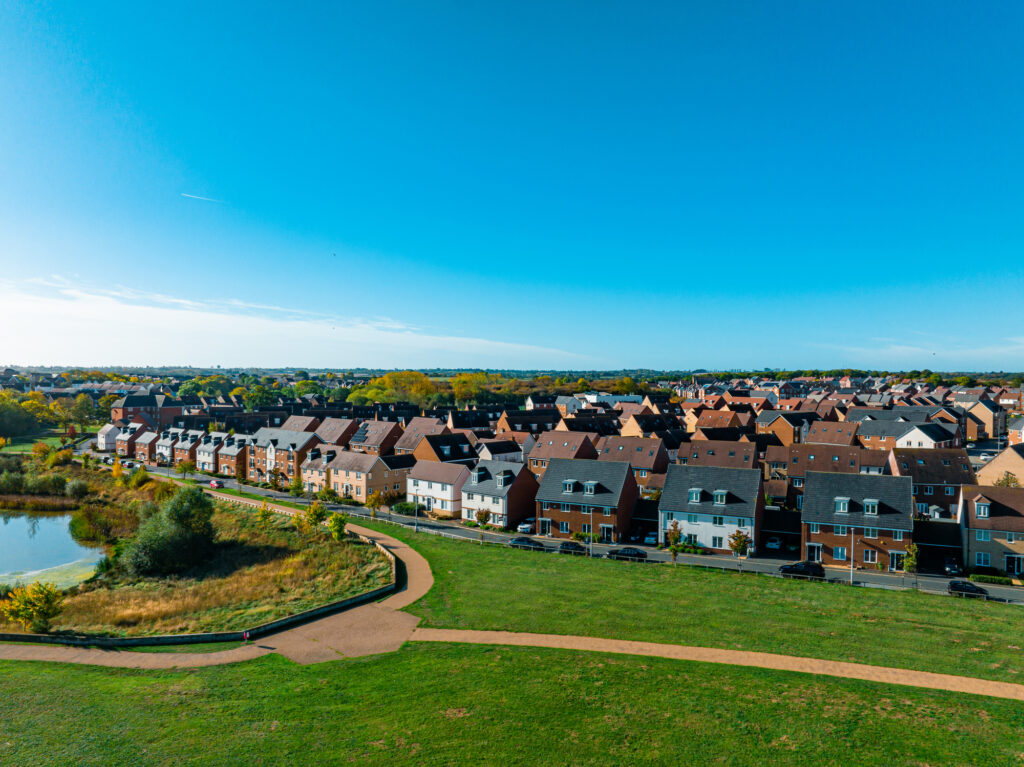
William Lovetts Almshouse Charity has owned and managed six properties for 180 years. It’s now built six more homes, which all include solar panels and other renewable technologies. Here, Chair of Trustees Charles Porter shares how Charity Bank’s Green Loan and Grant scheme was instrumental to the project.
Why did you decide to build the new almshouses?
We had two main objectives: Firstly to provide more appropriate, modern accommodation for our older residents. Secondly, house prices are high everywhere, so we wanted to give young couples a stepping stone to start their life together. Our previous criteria included that residents had to be of limited financial means and aged over 55, but now we have a mixed community as up to six of our 12 properties are available for young people.
Could you have built the almshouses without a loan?
No, the co-operation of both Homes England and Charity Bank has been absolutely essential to make the project happen.
How did you find out about Charity Bank?
We’re members of the Almshouse Association. Through them, I became aware of the Almshouse Consortium, which has a framework agreement with Homes England to access grant funding. I then found out that two banks are particularly active in the almshouse sector, one of which is Charity Bank.
I had initial discussions with both banks. The terms offered by Charity Bank, coupled with the way they were handling us, made them the preferred lender. Carolyn Sims, the Director of Impact Lending at Charity Bank, is heavily involved in the almshouse sector herself and has real empathy with it. From the outset, she was incredibly supportive, and her team have been brilliant in delivering exactly what we needed; in fact, they’ve delivered more than we were expecting.
Alongside your main loan, you took out a Green Loan, which came with a £50,000 Green Grant. Can you tell us about that?
We wanted to make the new bungalows as sustainable as possible, by including solar panels and all the bells and whistles, but being a social housing project, the costs of involving those technologies could have made the project unviable.
Carolyn made me aware of Charity Bank’s Green Loan Programme, which gave us the perfect combination of loan and grant funding, and meant we could incorporate all the renewables that we wanted to. Homes England also let us know that they’d be sympathetic in their grant allocation if we made the homes more sustainable.
What renewable technology have you installed using the Green Loan and Green Grant?
We had a report done by a renewables consultancy and have been able to incorporate all of their recommendations because of the grant funding we got from Charity Bank and Homes England.
We’ve got two big boreholes, which power six shoe-box-sized heat pumps, one in each bungalow. They power the underfloor heating and hot water. On the roof, we’ve got solar panels, which feed into a battery storage system. The homes have modern standards of insulation, so they’re very cosy, and they’ve got big south-facing terraces and French windows, designed with passive solar gain in mind. We’ve also provided six EV charging points, so we’re future-ready.
We have also installed a 5,000 litre tank to collect all the rainwater from the roofs, enabling us to provide water to the neighbouring allotments as well as for the almshouse grounds.
Presumably, the residents will benefit from cheaper energy bills?
They pay for their energy costs through a service charge to us, rather than having an individual bill. We’ve been able to set that charge at a lower rate than they were on previously.
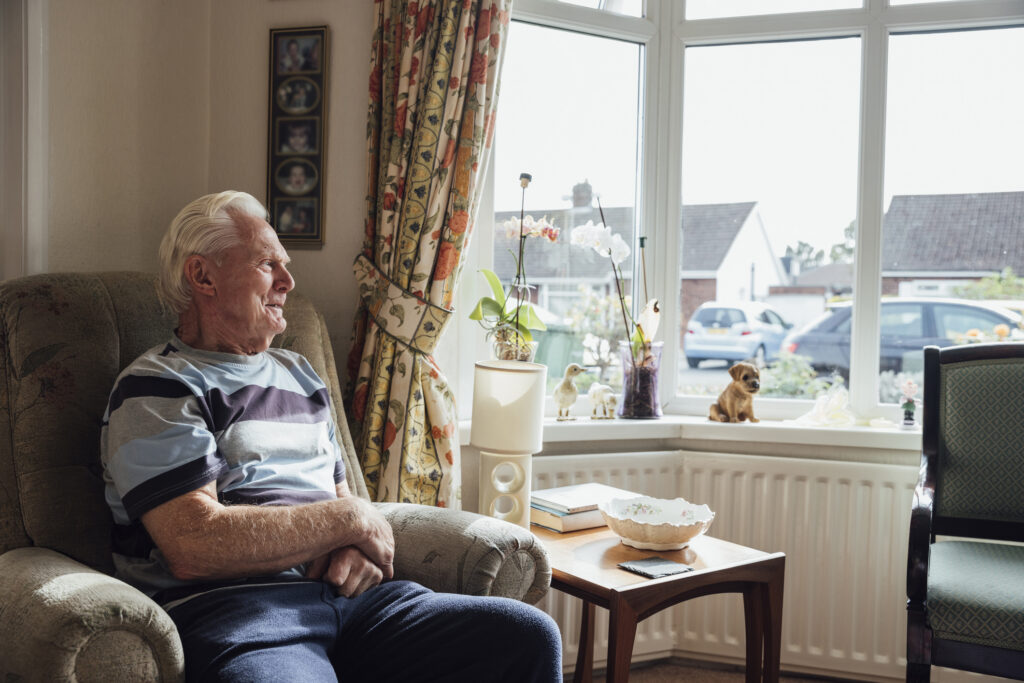
One resident has told me several times that he feels like he’s won the lottery living here.
How did you find working with Charity Bank?
They’re a really nice bunch. The clue is in the name isn’t it? ‘Charity Bank’ means that they have an empathy with and understanding of charities, how we work and the issues we face, and they’ve been incredibly supportive and positive throughout the process. It’s about the values and attitudes of the people you’re dealing with.
We had a great account manager and Carolyn Sims; Charity Bank’s Director of Impact Lending has also been a joy to deal with. The Lending Services team are very efficient. They always respond if I send anything through and give me gentle reminders when I’m meant to be doing something!
It’s always good to have an individual relationship with somebody who you can pick the phone up to or drop an email to and get problems sorted or queries dealt with.
I used to work in banking, so I know what it can be like when you’re dealing with commercial banks, who can get a bit carried away with all their requirements. Charity Bank does the job very pragmatically and in a commonsense way that makes them easy to deal with.
Is this the first large loan the charity has taken out?
It’s the first loan it’s ever had. In fact, it’s the first time the charity’s dealt with anything like this at all. William Lovett built the original six almshouses in 1846 and set the charity up in the early 1850s. From then on, very little changed until we decided to build the new almshouses, so an absolute transformation was needed of every aspect of the charity to get to where we are now. We had to form a CIO (charitable incorporated organisation) and become a registered provider with the housing regulator, which took three years.
Were all the trustees on board from the start, or was there some hesitancy about taking out the loan?
I think everybody recognised that if we were to achieve our objectives, we would need to have a loan, because you can’t access Homes England funding without demonstrating that you’re making maximum use of your own resources, and we had a terrace of almshouses that was completely unencumbered.
Do you have any plans to build more properties?
We’re working with architects on a potential third block of almshouses and both Charity Bank and Homes England seem keen on continuing to support us. We’ve also got a grant from the Forestry Commission to turn a parcel of land into a community wood.
What would you say to another almshouse charity that was considering applying for a loan?
I would recommend any almshouse charity speaks to Charity Bank to explore whether they can help, because I think they are an excellent partner to deal with for charities of our type.
If you need a loan for your almshouse charity, please contact Charity Bank at [email protected].
About Charity Bank
Charity Bank is the loans and savings bank owned by and committed to supporting the social sector. Since 2002, we have used our savers’ money to make more than 1480 loans totalling over £653m to housing, education, social care, community and other social purpose organisations.
Nothing in this article constitutes an invitation to engage in investment activity nor is it advice or a recommendation and professional advice should be taken before any course of action is pursued.

 Story
Story